Thinking with your hands: Graphic Facilitation and Visual Tools Course – Erasmus+KA1
This course provides the fundamental visual tools for group facilitation — essential skills for anyone working in complex, multicultural educational settings. Visual tools help educators make learning processes more effective and tangibly improve the quality of group work.
About the Thinking with your hands: Graphic Facilitation and Visual Tools Curso Erasmus+KA1
In a world saturated with digital images and video, graphic facilitation emerges as a vital tool for creating space for thought, fostering deep listening, and enhancing cognitive processes through manual expression.
This course provides the foundational visual tools for group facilitation—essential skills for anyone working in complex, multicultural educational settings. Visual tools help educators make learning processes more effective and tangibly improve the quality of group work.
The course is designed by La Casa nel Parco, the association that manages Casa Gavoglio, a community hub and intercultural centre dedicated to civic participation and the inclusion of people with fewer opportunities. Casa Gavoglio is located in Italy, in the city of Genoa, within a multicultural neighbourhood housed in a former military barracks.
Learnings
Knowledge
- Basic principles of Graphic Facilitation and Visual Literacy in non-formal educations
- Distinction between drawing from observation, artistic production, and facilitation tools
- Fields of application of visual tools in adult education. Key authors, methods, and sources
Skills
- Applying visual notes to memorise, plan, and reflect
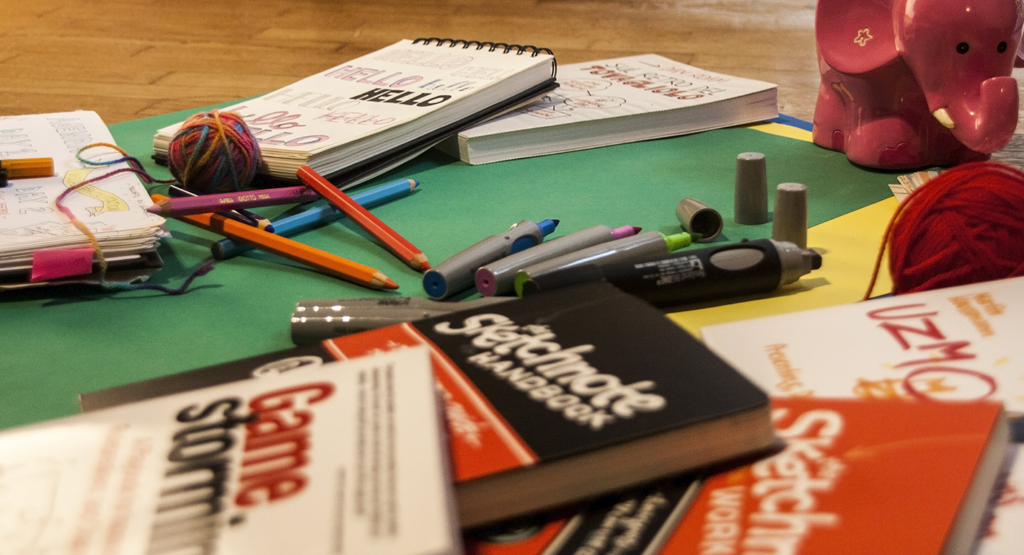
- Using core graphic facilitation tools (visual notes, posters, three-dimensional elements, card decks)
- Selecting the most suitable visual tool according to the specific context and the group’s educational goals
Unlocking the power of graphic facilitation: What to Expect
Participants in this dynamic course will embark on a 5-day journey of discovery and growth, gaining essential knowledge and skills in intercultural mediation. Here’s a glimpse of what you can expect:
Day 1: Introduction to Visual Thinking and Unlocking Creativity
- Introduction to Visual Literacy and Visual Thinking in non-formal education
- Overcoming the blank-page block: understanding the difference between artistic production and graphic facilitation
- Can you draw? Exercises to unlock the fear of drawing
- Words (and drawings) for everyone: how and why to encourage adults to take visual notes
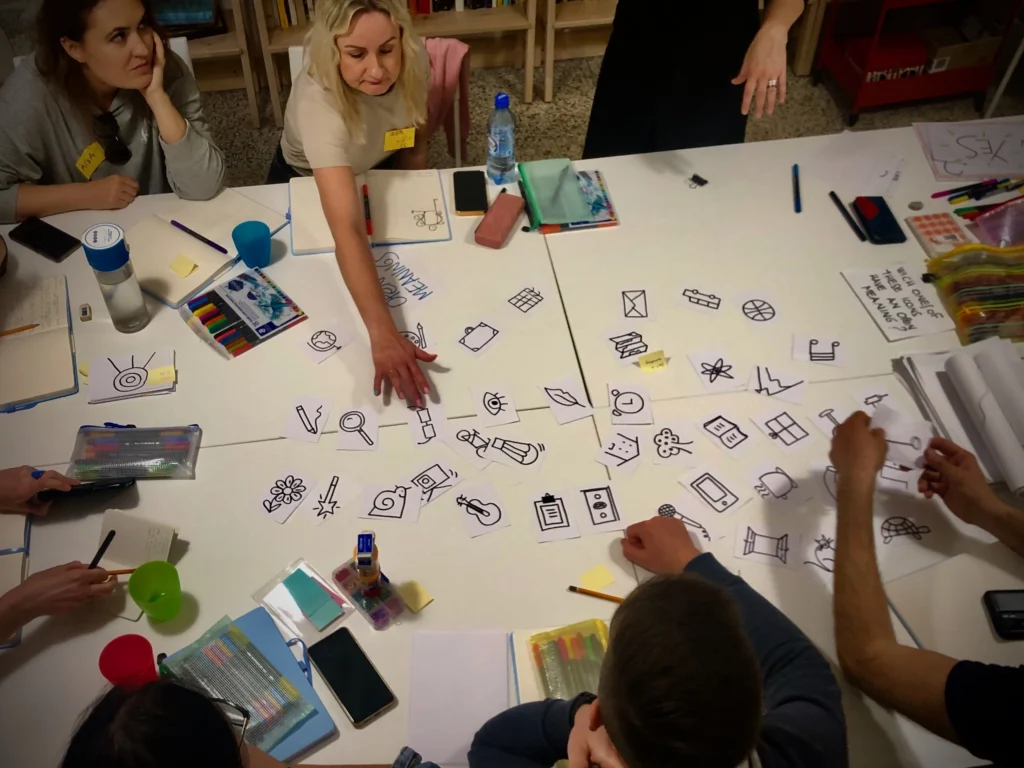
- The basic visual alphabet: graphic icons (ideograms and pictograms)
Day 2: The Visual Alphabet, Sketchnoting, and Practical Application
-
Introduction to Sketchnoting (visual note-taking)
-
The basic visual alphabet: templates, lettering, and strategic use of colour
-
Applying visual notes to support memorisation, activity planning, and deep reflection
-
Exploring a place through visual tools: the neighbourhood and the city as learning spaces
Day 3: Spatial Learning and Visual Metaphors
-
Visual metaphors: what they are and how they work
-
Developing graphic templates and visual metaphors to stimulate engagement and collaborative learning
Day 4: Photography, Mental Health, and the Practical Toolkit
-
How do you feel? Photographs as tools for group climate
-
The “How Do You Feel” project: promoting mental health in libraries
-
Toolkit presentation: card-based tools for facilitating conversations on mental health in libraries
Practical workshop using the Toolkit and Sketchnoting tools -
Why visual tools support emotional awareness and how they accompany wellbeing processes
Day 5: Tool Selection, Synthesis, and Future Application
-
Guiding your choices: selecting and combining the most suitable visual tools based on target
group, context, and educational goals -
Practical synthesis session, visual feedback, and course closing
-
Beyond the course: introduction to key experts in graphic facilitation, review of books and
websites, and guidance for autonomous study
Active Training Methodologies for Multicultural Classroom Strategies
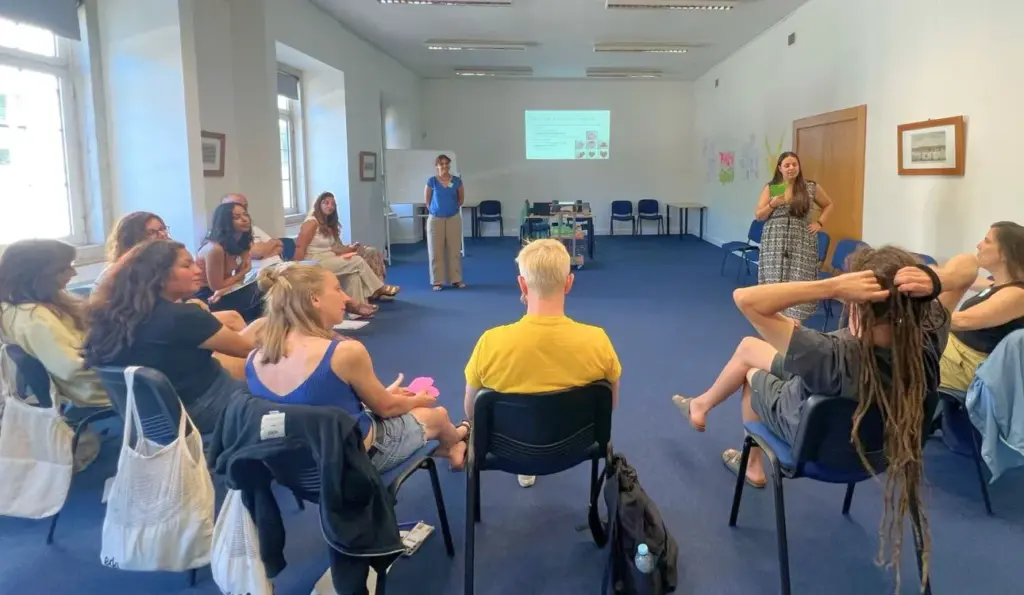
This training uses group-centred non-formal education methodologies, encouraging active participation and reflection. Group dynamics, visual feedback, and informal moments are worked on daily. Graphic facilitation maps ideas and enhances collective work, supported by resources for continuous learning.
Upcoming courses
Target Audience
Designed for a wide range of education professionals, project managers, educators, social and cultural workers, trainers, teachers, and facilitators working in adult education.
Format and location
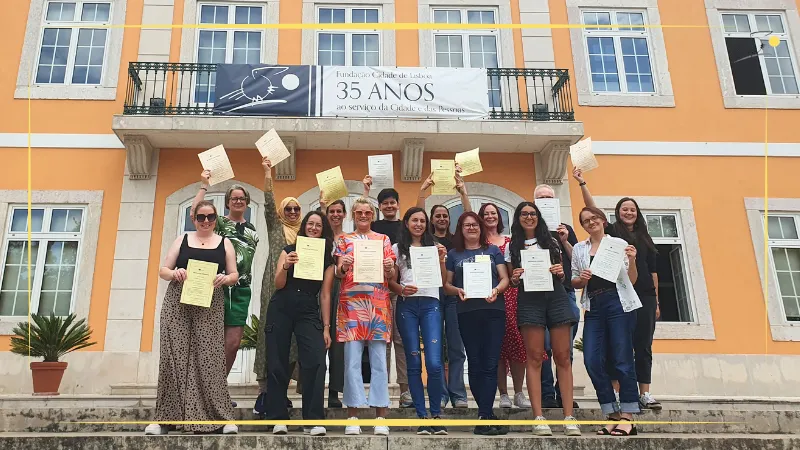
In-person course, at the Lisbon City Foundation headquarters in Lisbon
Duration
5 days
7-day course also available
For groups of at least 12 participants,
schedule adjustments can be made
according to needs.
Tuition and services included
- Certificate of attendance
- Europass Mobility Document
- Administrative support
- Coffee breaks
- Cultural Activities
Certification
Lisbon City Foundation (OID E10100997)
Contactos
📞 +351 964 581 360
✉️ training@fundacaocidadedelisboa.pt
Training team
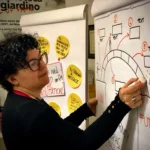
Lucia Tringali
Project Manager at Casa Gavoglio, she is a graphic facilitator and an experienced trainer within the Erasmus Youth and Adult Education programmes. Passionate about children’s literature, she works with picture books in projects dedicated to the psychological well-being of both young people and adults.
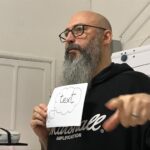
Guido Bagni
Coordinator of the organisational secretariat at Casa Gavoglio, is an experienced trainer, group facilitator, and network facilitator in international projects. With a strong interest in graphic design and photography, he has created numerous visual products, including toolkits, board games, and tools for group facilitation
Próximos cursos de formação
Verifique as próximas datas disponíveis
Intercultural Communication | Erasmus KA1 | october 2026
Mediation and Intercultural Dialogue | Erasmus KA1 | November 2026
Teaching the Future, Climate Action and Sustainability | Erasmus KA1 | November 2026